Wednesday, July 24, 2013

Family Festivals at Peddler's Village


I recently spent a hot, sunny afternoon at Peddler’s Village in Lahaska, Pennsylvania. It’s about a 90-minute drive from Philadelphia, and is known for being a spectacular shopping destination, but it offers so much more. This time, I went to experience the Bluegrass and Blueberry Festival.

Several bluegrass bands and square dance groups performed from 10 am to 5 pm around the property. My friend, Lorraine, and I toe-tapped to the lively sounds of Borderline, a local bluegrass band. Other listeners gathered in and around an old-fashioned gazebo where the band had set up.

There were blueberry goodies at every turn. Cock and Bull Restaurant served blueberry and white chocolate chip bread pudding; Skip’s Candy Corner created blueberry fudge; Buttonwood Grill stuffed French toast with blueberries; and even Casa Casale, which specializes in Italian foods and items, offered free tastings of blueberry balsamic vinegar over mozzarella chunks. But the treats at the Town Crier Bakery were over the top: blueberry butter cake, blueberry scones, blueberry pie, blueberry crepes, blueberry shortcake and more.

Lined up along the paths were stalls selling blueberry products. You could buy fresh blueberries, preserves, pancake mix and other things blueberries. And that, folks, is only a sampling of the blueberry mania.

It’s going to be an annual affair, but if you can’t wait until next year, then get ye to the Peach Festival on Saturday, August 10 and Sunday, August 11. In addition to loads of peach confections, (shopper alert!) you’ll be able to scoop up bargains at the Annual Sidewalk Sale.

Unlike the festivals that are created for adult tastes, like beer and mushrooms, Peddler’s Village’s festivals are family-friendly. Autumn brings the Scarecrow Festival on September 21 and 22 and the Apple Festival on November 2 and 3. They pull out all the stops during the holiday season with the Christmas Festival on December 7 and 8. Since peaches are one of my favorite fruits, you know where I’ll be in August.

For more information on upcoming festivals and events, go to peddlersvillage.com.   

Friday, July 5, 2013

A Horticultural Extravaganza at Pennsylvania's Longwood Gardens


Acres of flowers, shrubs, trees and not a weed in sight. For over 200 years, the property now known as Longwood Gardens has been devoted to botany. In 1798, the Peirce family, who purchased the land from William Penn in 1700, began planting an arboretum on their farm. By mid-nineteenth century, it showcased one of the America’s best tree collections, and created one of the first public parks. In order to save those trees from demolition 1906, Pierre DuPont bought the farm. Through his vision and gardening talents, the arboretum expanded to become an exceptional horticultural showplace. DuPont had been inspired by the great gardens of Europe, and the entertaining water displays he had observed throughout his life.

The grounds
Today, Longwood Gardens ranks as the world’s preeminent horticultural venue. On a pleasant day, stroll along the Flower Garden Walk and through Peirce’s Woods. Explore the Forest and the Meadow. The Idea Garden will inspire you to improve your own garden. And don’t miss the expertise of the gardeners in the Topiary Garden. And that’s just a sampling of what you’ll find.

The conservatory
But, rain or shine, the conservatory is a “must-see.” The four-and-a-half acre climate-controlled facility contains the unforgettable Orchid House and the Rose House, a unique water lily display, the amazing Cascade Garden, an enormous Orangery and much more.

All through the year
Besides the permanent exhibitions, Longwood Gardens offers music programs, culinary events, horticultural classes and seasonal displays and programs, such as the magnificent Christmas spectacle and ice skating show. Summertime brings entertainment under the stars. Until September, watch water spouts frolic while fireworks thrill you during the Festival of Fountains. Don’t miss the music of Dmitri Shostakovich (also with fireworks) on the evenings of July 20 and August 31, 2013. The renowned Philadelphia Orchestra performs on July 18 and 19. As the sun goes down on Fridays, it’s time for families with special fun activities geared to kids. And oenophiles should reserve their place for the four-course gourmet wine dinners before they are sold out.

Longwood Gardens is located in Kennett Square, a short trip from Philadelphia.

For more information and tickets, go to www.longwoodgardens.org.
All photos by Valerie R. Hutton

Wednesday, June 19, 2013

Don't Forget Apalachicola


Along the unspoiled “Forgotten Coast” of Florida’s Panhandle, Apalachicola, as part of Franklin County, sits atop Apalachicola Bay and at the mouth of the Apalachicola River. This rustic seaside fishing village has retained its maritime heritage. In the 19th century, it flourished because of the South’s cotton that was shipped from its port, the third largest on the Gulf of Mexico. Later came the lumber industry, and then the commercial harvesting of oysters, blue crab, shrimp and finfish.

With more than 900 historic sites, the National Trust for Historic Preservation named it as one of America’s Dozen Distinctive Destinations in 2008. The city reflects the “true” (meaning: pre-Disney) Florida coast with meticulously-restored Victorian homes, clapboard cottages, independently-owned shops, one small theater, lighthouses and a grimy working waterfront. With no high-rise glitzy hotels, visitors usually rent vacation homes, or check into historic inns or quaint B&Bs.

The Bay
Apalachicola Bay rates as one of the world’s most productive estuarine systems with 186 species of fish. Just ask the 40% of the area residents who work on the bay. Oystermen make up a large portion of those workers. Underwater oyster bars bring both good and bad news to fishermen: the bars can be hazardous to boats, but, on the other hand, they attract the fish. An expert fishing guide knows where the fishing hot spots are and where to avoid the troublesome oyster bars. If you choose to go it alone, follow a good chart.

The Beach
Locating a fine, pristine beach is like looking for hay in a haystack, but many people head for the one at St. George Island State Park because of its reputation. It has been on the list as one of the “Top Ten Beaches in America” by Dr. Beach for three years. Bathers like the white powder sand, but birders come looking for migrations in the spring and fall.

Lodging
Coombs House Inn is a posh Bed and Breakfast that Florida Monthly Magazine named “The Best B&B in Florida.” Built in1905, the mansion sustained extensive damage in 1911. It was restored, but in 1960, it was abandoned. The international decorator, Lynn Wilson, bought it in 1994, and transformed the structure into a superior inn. Complimentary amenities include breakfast, afternoon tea, free Wi-Fi, private baths and cable TV. Some rooms have refrigerators.

Gibson Inn was built in 1907 as a first-class hotel and is now on the National Historic Register of Historic Places. I especially admired the “Cracker” architecture, a traditional Florida style characterized by tin roofs, wood construction and wraparound porches. The antique furnishing reminded me of the past when men wore white linen suits and women carried parasols. Within the 30 guestrooms, there are private baths, wireless internet, cable TV and telephones.  


I stayed at one of the houses rented by ResortVacation Properties. Located on St. George Island, 333 houses have from one to eight bedrooms, fully equipped kitchens, central air and heat, cable TV, linens, decks and free Wi-Fi. Some homes are pet-friendly. My house had a large living room/kitchen with two bedrooms, a screened-in porch and a pool.

Must-See
I, like many other people, am fascinated by lighthouses. Cape St. George Lighthouse is the fourth edifice, the first being built in 1833. The third one collapsed in 2005. Following the original blueprints, the lighthouse was reconstructed from 2007 to 2008, using salvaged bricks from the former building. Next door is the Lighthouse Keeper’s House and Museum that displays marine artifacts and rooms that shows how the light keeper and his family lived. Also visit the St. George Island Visitors Center on site.

You don’t hear that much about old-fashioned Florida, but once you visit Apalachicola, you’re sure to remember it.


Thursday, June 13, 2013

Starring Roanoke, Virginia


It’s common knowledge by now that the Blue Ridge Mountains are spectacular, and Roanoke is its star. Known as the “Star City of the South,” Roanoke struts its stuff with plenty to see and do. To legitimize that claim, a giant (88½-foot tall) light star shines over the city from Mill Mountain.

Railroading for kids of all ages
The Roanoke Valley celebrates its railroad heritage in many ways. The historic and luxurious Hotel Roanoke offers a Train Lovers Package that features a room overlooking the train yard. From there, fans can walk over to the O. Winston Link Museum that displays Link’s nostalgic black and white photographs of steam engines rolling through the rural landscape.

To catch an up-close view of steam engines, visit the Virginia Museum of Transportation. Located in the former Norfolk and Western Freight Station, you’ll see the largest collection of diesel and steam engines in the country, including the huge Class J-611 and Class A-1218.

Under one roof
In downtown Roanoke, Center in the Square houses the Science Museum of Western Virginia, a great family stop with interactive exhibits and a planetarium with IMAX quality films; the History Museum of Western that showcases permanent and temporary exhibitions that reveal the history and culture of the Roanoke region; and Art Beyond Center that presents the affordable works of emerging artists and artisans.

The Historic Farmers’ Market has been doing business since 25 hucksters were issued licenses in 1882. Today its offerings have expanded to include specialty shops, art galleries, country stores, and restaurants, as well as local produce.

Good food warms the spirit
Roanoke has the highest number of eateries per capita of any city in Virginia, so finding good food is no problem.

For elegant dining, the posh Regency Room at Hotel Roanoke is the place to go. Enjoy a romantic dinner by candlelight with live entertainment and dancing on Saturday nights. The chefs purchase locally grown produce and support Virginia wineries. In addition to a gourmet menu, the restaurant is renowned for the popular regional dishes of Peanut Soup and Spoon Bread.

Since 1941, The Roanoker has been dishing out hearty Southern breakfasts of biscuits with honey, grits, fried apples, sausage and its gravy, pork tenderloin, rib eye steak, and much more. The landmark café also serves lunch and dinner.

Real chili aficionados recommend the Texas Tavern. The original “chile (sic)” recipe found its way to Roanoke from San Antonio in 1930 when the tavern was founded. Accolades have poured in for the “chile,” the hot dogs, and the “Best Inexpensive Lunch.” Texas Tavern is also known as the “Millionaire’s Club” because everyone is treated like a millionaire (and plenty eat there) regardless of status.

After Roanoke entertains you, you can head down the Blue Ridge Parkway

Tuesday, May 28, 2013

Beautiful Bruges, Belgium


An hour’s train ride from Brussels transports you back to the Middle Ages. As a UNESCO World Heritage Site, Bruges (it rhymes with “rouge”) must maintain its historic architecture in the Old Town with no modern changes. It’s known as the “Venice of the North,” with an abundance of canals that flow slowly through the heart of town, passing buildings with crenulated gables and fancy brickwork.
           
Bruges was once one of Europe’s wealthiest cities and its cultural capital. In the 14th century, its population rivaled that of London.  Because of waterways that led to the North Sea, ships were able to enter the city, allowing its textile trade to flourish. Unfortunately in the 16th century, river silt clogged the harbor and the town declined. But happily in the 1980s, travelers found another way into Bruges, spurring a present-day financial boon.
           
The imposing Gothic structures on Bruges’ Market Square (once a harbor for ships) reflect the town’s earlier prosperity. Enter the elegant Town Hall to view the lavish assembly hall. Close by is the Belfry and Cloth Hall where you may climb 366 spiral steps to its tower for a spectacular vista of the area. Or enjoy the bells from below as a carillonist performs summer concerts on Monday and Wednesday evenings. Located in a modest corner of the square is the Basilica of the Holy Blood. The small church displays a relic of Christ’s blood that they claim was delivered from the Second Crusade in 1150. A nearby church holds another religious treasure.

Michelangelo’s precious Madonna and Child is displayed in the Church of Our Lady. It’s the first and only sculpture by Michelangelo to leave Italy during his lifetime.  But if you want to see the art of Bruges’ hometown son, Hans Membling, get yourself over to the medieval St. John’s Hospital, located across from the Church of Our Lady. Six of his paintings hang in a building that once tended the sick and dying. But when art and history become overwhelming, it’s beer to the rescue. Let the servers at Den Dyver Restaurant soothe you as they pair each dish of a multi-course meal with a specialty beer.
           
Live like royalty for a few days in the posh Kempinski Hotel. Located not far from the main square, the former Duke’s palace reopened in 2008 as a five-star hotel. Built in 1429 for the wedding of Phillip the Good and Isabella of Portugal, the castle has been brought up to date with luxurious modern amenities. But if your budget can’t absorb the hefty room rate, treat yourself to a gourmet meal in their elegant dining room instead.
           
It’s no secret that Bruges combines the best of the Old World with the realities of today.


Thursday, May 16, 2013

The Birthplace of Walmart


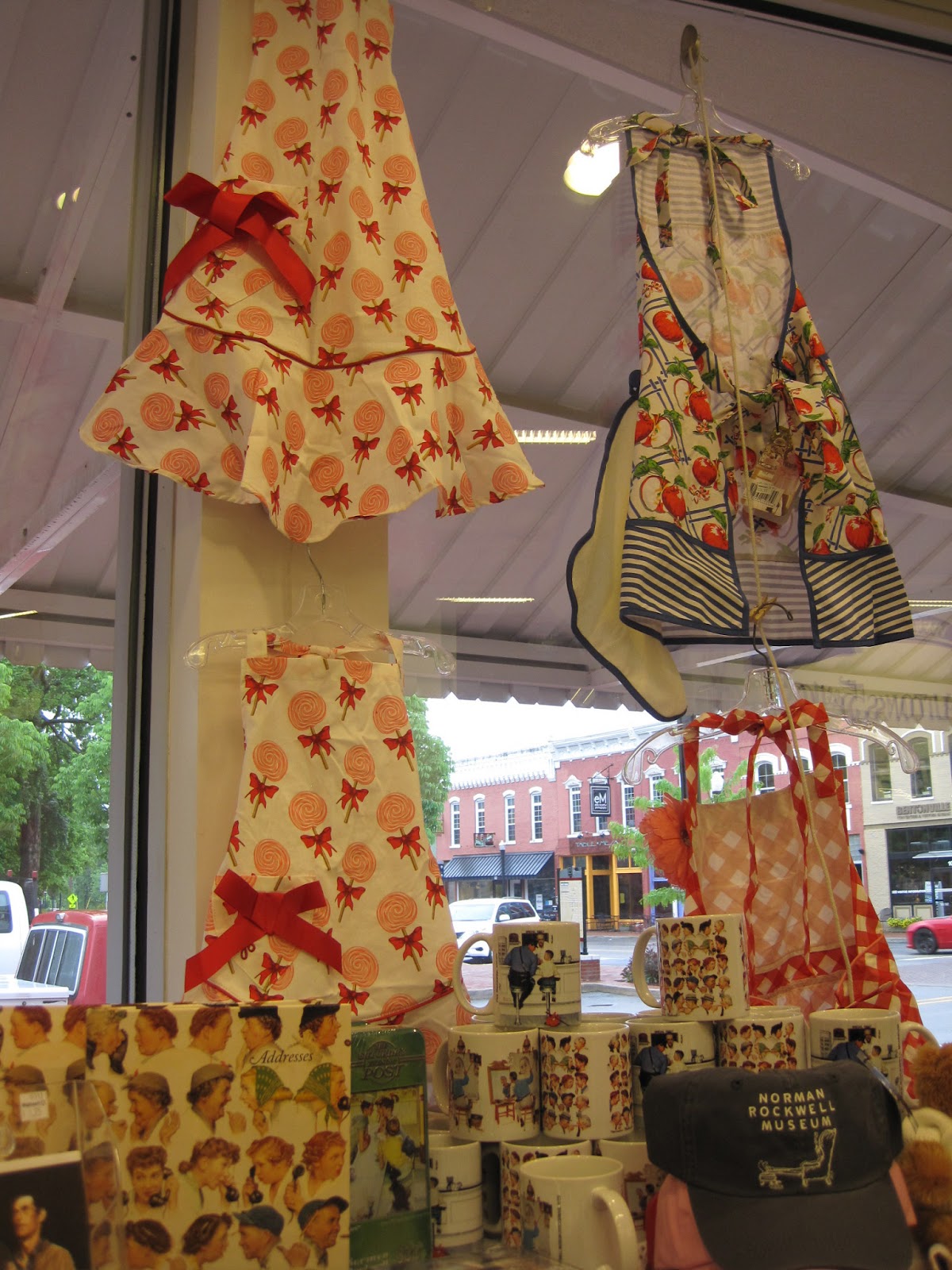
Is there anyone in the civilized world who is not familiar with Walmart? I, like many others, was curious to find out how the company got its start. In 1950, Sam Walton opened a 5&10 Store (a.k.a. Five and Dime) in the small Arkansas town of Bentonville. It wasn’t long before he expanded the business by purchasing the adjoining barber shop – and he was on his way to big success. When I first entered the store, I saw a display of aprons that were the kind my grandmother wore. Other merchandise from that same era was interspersed with souvenir and gift items.


The building now serves as the Walmart Visitors Center where fans can discover the full story of Sam Walton and Walmart. On the self-guided tour, you can take in as much or as little of the exhibits as you want, but don’t miss his old office and his wife’s wedding gown.

At the end of the exhibition, a door leads into Sparks Cafe, a mid-20th century soda shop. You won’t see the Fonz, but you can step up to an old-fashioned marble counter, or sit in a plastic-covered booth. Take in the wall telephone, posters and other vintage decorations while sipping a fountain drink or munching on a fresh-scooped ice cream cone.


When you exit, take time to walk through and around the idyllic square to get the feel of small town Americana. It gave me a sense of peace and déjà vu.