Sunday, November 24, 2013

Eating and drinking in Tuscaloosa


Lots of folks visit Tuscaloosa this time of year to cheer on the University of Alabama’s championship football team, the Crimson Tide. Others find themselves in town on an Alabama food tour or traveling a music trail. So where are some of the most popular places to eat and drink?

 
The original Dreamland BBQ has been serving slabs of pork ribs since 1958. Many Alabamans know the name, but John and Lily Bishop opened their first café in Tuscaloosa as a rib and juke joint. The Bishops’ kids, Jeanette and John, Jr., still operate the restaurant as their parents did. Nothing much has changed, although today’s menu has an addition of sides: potato salad, macaroni salad and coleslaw. You can still see ribs being grilled over a wood fire where your order will be freshly-made because, according to Jeanette, “…the ribs take four minutes in the pit.” But be prepared to wait for a table, because the word has spread beyond 1958’s neighborhood clientele to where Dreamland has become a Tuscaloosa food institution.

           
Locals drive out to rural Tuscaloosa to Nick’s in the Sticks, a.k.a. Nick’s Filet House, for great steaks at hamburger prices, like the tender small filet for $9.50! Make sure you don’t pass by because there’s no sign anymore. Owner Lloyd Hegenbarth says it blew away in Hurricane Ivan. But the winds didn’t touch the rustic décor inside. Dozens of signed dollar bills are still stapled to the ceiling, Crimson Tide posters still hang on the walls and the well-worn furnishings are still in place. Steaks, shrimp, chicken, salads, wings, burgers and other “just plain eatin’s” adorn the menu. But their signature drink, the invigorating Famous Nicodemus, is far from plain.

           
Downtown Tuscaloosa heats up at night. The clubs along Greensboro Avenue, University Boulevard, Fourth Street and 23rd Avenue offer a variety of entertainment. Brown’s Corner Dueling Piano Bar and Grill allows its patrons to eat good food while they listen to and interact with the pianists. The Gray Lady Bar is a sports (uh, football) bar that features the championship years of the Crimson Tide in a wood inlay floor. Don’t miss their two dollar beers and the green drink, Sex with an Alligator. Enjoy cool jazz with a young hip crowd at Little Willie’s.

 
For more information, go to visittuscaloosa.com.

 
Photos by Eleanor Hendricks McDaniel

Wednesday, November 6, 2013

Fonthill Castle -- Doylestown's Shadowy Showplace


On Halloween, my best buds, Val and Joan, and I traveled the 45-minute drive from Philadelphia to Doylestown, PA. Our main destination was to the Grace Kelly (a Philly girl, too) exhibition at the James Michener Art Museum. The exhibit displays her clothing, the Oscar for her performance in the film, The Country Girl, personal letters from the British royal family and other famous folks, videos and home movies, other memorabilia and more.

 
After a quick and tasty lunch at Hickory Kitchens, we scurried over to the four o’clock (and final) daily tour of Fonthill Castle. It was built between 1908 and 1912 by Henry Chapman Mercer, a brilliant, but eccentric, entrepreneur as a shrine to his interests and business. As a proponent of the Arts and Crafts Movement, he established the Moravian Pottery and Tile Works, a factory that still produces tiles, and offers public tours, too. The factory can be found on the 70-acre estate that also houses the castle.

 
I received a hint of what was to come when I entered. The first thing I saw was a stuffed raven (a la Poe and Hitchcock). We were ushered into a nearby sunroom to view an episode of the TV show, America’s Castles that featured Fonthill. Soon our guided tour began. (No photography allowed.)

 
Mercer designed his home with the forethought of it becoming a museum after his death. I can’t say much for his architectural skill, but he built an undoubtedly unique structure entirely of concrete. That material was chosen as a deterrent to fire which would have destroyed his treasures. Now when I say treasures, I don’t mean the typical rich man’s treasures of gold and precious gems. Although very wealthy, Mercer’s treasures consist of artwork, antiques, books (over 6,000, documented and housed in concrete bookcases) and an extensive collection of historic foreign tiles bought on his travels, that include Mesopotamian cuneiforms dating back four thousand years and a section of Chinese roof tiles. He also showcased his own handcrafted tiles. They are all embedded in concrete walls, pillars and ceiling ribs.

 
I didn’t see one room out of the 44 in the standard rectangular or square shape. The 200 windows did little to wash away the gloom, and the old-fashioned unshaded bulbs with exposed filigree wires did little to help. The 32 staircases popped up suddenly in unexpected spaces as we trekked through room after room. In spite of his peculiarities, Mercer was a modern man of his day, and far ahead of many builders. He included 10 bathrooms, fitted with tubs, sinks and flushing toilets, electricity, an intercom system and, alongside 18 fireplaces, central heating. The docent insisted that the home was more cheerful than it appears today with colorful draperies, Oriental carpets and painted walls.

 
But for me, maybe because I had the creepy Halloween spirit, I sensed that there were other spirits lurking in Fonthill. Others may feel it, too, as they follow the docent around during the darkening four o’clock tour during Standard Time. (If she leads with a candle, then it’s all Poe.) The venue is open all year, and I highly recommend it for people looking for something different (and, maybe, a little macabre).

 
Photos by Eleanor Hendricks McDaniel
Go to buckscounty.org for more information.

Wednesday, October 9, 2013

Trees and green at Lied Lodge in Nebraska City


When I travel, I look forward to staying in unique hotels, etc. and not the “same-old, same-old.” The Lied Lodge and Arbor Day Farm in Nebraska City fit my bill. The structure and outbuildings sit on 260 acres of wooded and cultivated land. Vineyards and orchards encircle the enormous lodge that consists of 144 guestrooms, meeting spaces, a restaurant, an indoor pool, an exercise room, a spa and many other amenities.

The lush forest is the brilliant result of the obsession of J. Sterling Morton and his wife, Caroline. As a young married couple, the Mortons relocated to the Nebraska Territory in 1854 to claim 160 acres of unsurveyed federal land. In order to comply with the rules, they built a simple dwelling (which, over the years, has grown into a magnificent mansion). Coming from the East, they were appalled by the lack of trees on the vast grassy prairie.

J. Sterling became the editor of the Nebraska City News, and then developed a political career that led all the way to becoming US Secretary of Agriculture under President Grover Cleveland. But his passion was planting trees. In the beginning, he lobbied the state of Nebraska to set aside a day each year to plant trees. In 1874, the Nebraska Legislature proclaimed April 22 (Morton’s birthday) to be an annual event – the first Arbor Day. According to J. Sterling, 25 billion trees had been planted across the nation the first 30 years of Arbor Days.

So Lied Lodge is all about trees. Even in my guestroom, a log served as a column. Although apple trees are the primary crop, hazelnut and peach trees are grown, too, and soon there will be cherry trees.

While at Lied Lodge, be sure to visit Arbor Day Farm Tree Adventure pavilion to enjoy the exhibits and interactive displays. When there, don’t miss the film, “Trees in the Movies” that features the trees’ role in dozens of films. Experience the outdoors by hiking the trails or perch in one of many tree houses. Explore Arbor Day Farm on the Discovery Ride through the Vineyard Tour, the Twilight Tour, the Preservation Orchard Tour and other excursions. Walking tours include a stop at a fuel wood biomass heating and cooling system and a windbreak arboretum, where you can exit with a gift of a tree. Grab a light bite, taste wine and purchase scrumptious apple pies and other fresh products at the Apple House and Pie Garden Café.

I grew up appreciating trees. As a schoolchild, I had to memorize the poem, “Trees,” written by Joyce Kilmer, and I spent my young years climbing and swinging from trees. But, after my recent years of gathering up (and cursing) fallen leaves, it was good to be reintroduced to The Tree. That was the joy of staying at Lied Lodge.

Friday, September 6, 2013

Virginia's Mountain High Wineries


Picture grapes growing on vines that weave through rolling hills, framed by the beautiful Blue Ridge Mountains. Most American wine lovers agree that the wineries in eastern Virginia are exceptional but, according to many well-respected wine specialists, western Virginia is an up-and-coming wine region.

So veer off the Blue Ridge Parkway for the opportunity to taste and buy wines along the Wine Trail.


On a high plateau (1720-foot elevation) ringed by the Blue Ridge and Allegheny Mountains, David and Marie Gibbs grow vinifera grapes on ten acres of rich soil to produce French wines. According to David, his location enjoys a micro-climate where the hill is actually warmer than the valley. It’s apparent that he loves his land. He says, “I like making the earth better than how I found it.”

They make 12 different wines, featuring Chardonnay, Cabernet Franc, Merlot, Traminette and Petit Verdot. Their two Chardonnays differ in style because of their fermentation. Chardonnay Reserve is aged in French oak. Oak adds complexity to wine, and this wine picks up a nutty flavor. The Chardonnay from the stainless steel vats has a tender, but crisp, note. Bring a picnic lunch along with you to eat on Virginia Mountains’ outdoor covered patio. Great wine, great food, great views.


Vintners Jim Holaday and Barbara Kolb Holaday employ “green” or organic growing methods and use only natural products. For instance, they clear the trellises of unwanted leaves so that the sun and air can circulate between the vines, thus preventing fungus. They compost with old leaves and crushed grape residue. They add carbon dioxide in bottles to push out oxygen which spoils wine.  “We make wine as if for family and friends,” says Barbara.

For a real tasting treat, sip the following wines from Blue Ridge Vineyards: Riesling, crisp and easygoing with a green apple taste that goes well with food; full-bodied Sweet Shiloh; Pinot Noir, a very light Burgundy that’s delicate on the palate; Gewurztraminer (or “G-wine”), spicy with a floral aroma of lychee nuts and excellent with Thai food; Traminette that’s blended with Riesling for texture; and Big Bear Red, a smooth and tender red.

Located in the tiny village of Eagle Rock (pop. 120) in the bucolic Shenandoah Valley, its hospitality is legendary. From March through December, people are invited to enjoy the 300-acre farm, picnic area, hiking trails, music performances and complimentary wine tastings. Check online for upcoming events.


A wine lover’s dream: To wake up at a winery and spend the day wandering through the vineyards, observing and learning Old World winemaking techniques in the winery and then sampling quality wines in the tasting room of a 1926 quaint farmhouse. That’s life at Fincastle Bed and Breakfast. Day trippers are welcome just to visit the tasting room and take the winery tour. The B and B is simply an added bonus to the award-winning winery.
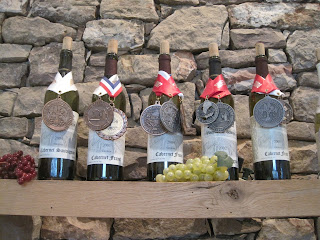
Fincastle’s Cabernet Savignon, with its smooth, fruity hints of cherry and black currant, has won medals in the Virginia Governor’s Cup, the Atlantic Seaboard Competition and the Wines of the South. Cabernet Franc, infused with notes of anise, black cherry and blackberry, has won awards in the International Eastern Wine Competition, the Virginia Governor’s Cup, the VWGA Virginia Wine Competition and the Atlantic Seaboard Competition. Semi-sweet Hybrid Vigor is blended from French-American hybrids and has placed in the Wines of the South and the Atlantic Seaboard Competition.

One of the owners, David Sawyer, lauds the area. “We moved here in 1987 in order to live in the mountains, and raise our children in a country environment,” he says. “The winery came into being in the late 1990’s. The land and climate are ideal for several varieties of French viniferas.”


When William, Nancy and David Morrisette established their boutique winery, it produced a mere 2,000 gallons. Today, its output exceeds 60,000 cases. Their success should be attributed to David and his staff.  David, who studied enology and viticulture at Mississippi State University, has developed exceptional and even some unusual wines.  

They’ve had fun creating their Signature Series. Many of the selections revolve around their love of dogs. For instance, Black Dog is a blend of Cabernet, Chambourcin and Merlot. Blushing Dog combines Vidal Blanc, Chambourcin, and Riesling to become a semi-sweet blush wine. Dogs grace the labels. Nevertheless, Chateau Morrisette celebrates the Blue Ridge by paying homage to its mountain laurels and parkway mile markers, too.

You can also experience gourmet dining in Chateau Morrisette’s elegant restaurant. The chefs use regional produce and game to create French, Italian and American dishes. And don’t miss the specialty shop to purchase wine, gifts and apparel.

Just be sure when you leave these wineries (unless you have a designated driver) that you’re not as high as the mountains.

Sunday, August 25, 2013

The Mob in Las Vegas


People have always been interested in the mob’s presence in Las Vegas. You can learn everything you’ll ever want to know about America’s Organized Crime in Las Vegas’ Mob Museum. Housed in a former courthouse where big mob trials were once held, this authentic and informative account of gangsters and lawmen is definitely worth a couple of hours away from the casino.
The tour begins on the third floor of the building, and you work your way down. Stories of Al Capone, Bugsy Siegel (who opened the Flamingo Casino in Vegas) and other legendary bad men are told in detail alongside the famous lawmen who took them down. There are many surprising facts, like discovering a real town in Sicily named Corleone. Some displays are interactive, as in seeing yourself in a criminal lineup and by sitting in an electric chair. Many of the artifacts curdle the blood, but one unexpected artifact is the bullet-ridden wall from the St. Valentine’s Massacre.
On the second level, experience the solemnity of the courtrooms where Meyer Landsky and others were tried, and where the Kefauver Committee hearings drilled members of Organized Crime. But you’ll spend lots of time studying the photos and inside stories of lesser-known, modern-day and fictional gangsters – their lives and demise. You’ll learn the secrets behind the technology used by law enforcement. The area that focuses on Hollywood will bring back memories of great films. It also reveals the mob’s attempted stranglehold on the industry.
The gift shop is full of fun and serious items to take home.
The Mob Museum is open seven days a week. Students, the military, seniors, law enforcement and Nevada residents receive a discount on their entrance fee.


Friday, August 16, 2013

Discovering Beer in Madison


True, Madison never was the beer capital of Wisconsin, but it is the state’s capital. You can’t miss the strikingly beautiful Capitol Building that squats in the center of town. Go inside to view the spectacular rotunda. On Saturday mornings, the Dane County Farmers’ Market sets up on Capital Square. Over 300 local purveyors provide Wisconsin seasonal produce, meat, poultry, fish, sausage, baked goods, plants, cheese (lots of cheese), flowers and much more. Customers are encouraged to walk counter-clockwise, and, amazingly, they do.


The only Wisconsin specialty not sold at the outdoor market is beer. But as for independent and craft beers, Madison has a surprisingly large number of businesses. Here are a few of the best:

Capital Brewery was the first company to introduce a quality malt beverage to the citizens of Madison who had been lost in what Capital’s brew master, Kirby Nelson, calls “a beer desert.”  So 25 years ago, the company made Capital Pilsner, fashioned after the pilsners of Bavaria and Bohemia, and Capital Dark, that’s made from four different malts. They still make these beers and have no plans to stop. But for their silver anniversary, they created Eternal Flame. Among their wheat beers is the competitive Door County Lager that’s clean and pleasantly nutty.


Otto Dilba had the good sense to open the Ale Asylum in 2006. In five short years, his production has gone from 850 barrels that first year to 10,000 in 2011. As a beer purist, Dilba uses four basic ingredients: malt, hops, yeast and water – no corn or rice. He says, “I make bold flavorful beers that are approachable, but that (sic) connoisseurs can enjoy.” Although his beers are distributed statewide, you can partake in the Ale Asylum’s large taproom.

Try one or more of their superb ales. Sticky McDoogle is a medium-bodied Scotch ale with a hint of hops; Gold Digger Blonde has a perfect blend of hops and malt; discover coffee and chocolate as you guzzle Contorter, a dark Porter ale; and Hopalicious contains 11 kinds of hops, and is the highest selling pale ale in Wisconsin.

In 1994, college buddies Eliot Butler and Rob LoBreglio founded Madison’s first brewpub, Great Dane Pub and Brewery Company. The tavern, that’s located within steps of the capitol, began its life in a mid-19th century hotel, and soon spread to the adjoining old antique store. The classic pub interior includes a restaurant, a bar and a billiards parlor.

The brewery has 16 beers on tap, including the gold medal-winner German Pilsner. Its inventory highlights many international selections, such as Czech Pilsner, American Pale Ale, German Wheat Beer, Scotch Ale, English Extra Pale Ale and Emerald Isle Stout. Tours of the on-site brewery can be arranged by appointment.

Their hearty pub fare features man-sized sandwiches and platters alongside Wisconsin specialties. Face it -- you can’t visit a place without consuming at least one of its iconic dishes. Great Dane Pub serves several: Brats and Mash, starring a juicy Wisconsin bratwurst banger (sausage); Wisconsin Style Cheddar Mac, a twist on the traditional macaroni dish that’s oozing with a creamy combination of Wisconsin cheese and Great Dane’s Pilsner; and Beer Battered Cheese Curds, a beer-infused version of the deep-fried Wisconsin favorite. Join the Madison tradition to feast at Friday night’s Fish Fry, and Great Dane Pub goes one step further with its New London Bridge Fish Fry. According to legend, during the establishment’s renovation, workers discovered King William IV’s recipe for frying fish. Whatever… this English-inspired version offers a crunchy crust on haddock filets, which are accompanied by homemade Tartar sauce, Kohl slaw and pub fries.


Madison is keeping up Wisconsin's reputation as the home of exceptional beer.
(This is an excerpt from my article in Pathfinders Travel Magazine.)

Tuesday, August 6, 2013

Albany, Georgia is Naturally F-F-Fun

When a city’s trademark is a turtle, it’s a sure sign that the natural world matters. I became aware of Albany’s love of nature when I noticed the cement in center city giving way to parkland. The city gives the Albanians (residents of Albany, not Albania) RiverFront Park, located on the shores of the scenic Flint River: six acres of manicured outdoor recreational space with pavilions and picnic groves, and one and one-half miles of natural trails.

I strolled along the paved Riverwalk that runs three miles – it’s a wonderfully safe and easy way to see the river. Kids find fun at the park in a play fountain and Turtle Grove Play Park that features recreational areas for children ages one to 14. Activities range from a Tot Lot to a Rock Climbing Wall.

You can climb to the Horace King Overlook near the historic bridge built in 1858 by the former slave and master bridge builder, Horace King. I had learned about King when I started my day at the Albany Welcome Center. It’s housed in the 19th century Bridge House, and sits at the end of the famous bridge. At the entrance to the ancient span are detailed markers that tell the history of the bridge.