Thursday, May 16, 2013

The Birthplace of Walmart


Is there anyone in the civilized world who is not familiar with Walmart? I, like many others, was curious to find out how the company got its start. In 1950, Sam Walton opened a 5&10 Store (a.k.a. Five and Dime) in the small Arkansas town of Bentonville. It wasn’t long before he expanded the business by purchasing the adjoining barber shop – and he was on his way to big success. When I first entered the store, I saw a display of aprons that were the kind my grandmother wore. Other merchandise from that same era was interspersed with souvenir and gift items.
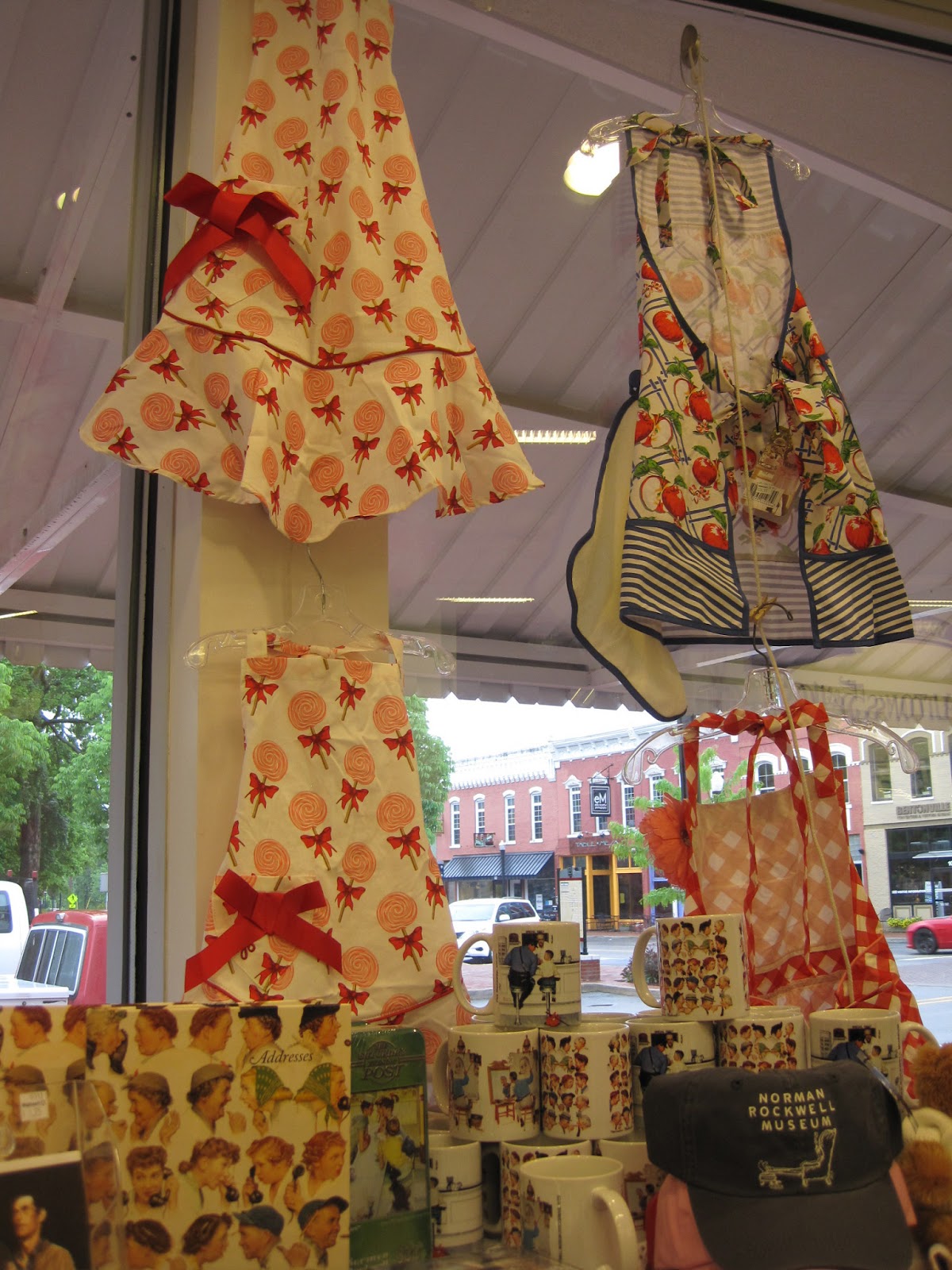

The building now serves as the Walmart Visitors Center where fans can discover the full story of Sam Walton and Walmart. On the self-guided tour, you can take in as much or as little of the exhibits as you want, but don’t miss his old office and his wife’s wedding gown.

At the end of the exhibition, a door leads into Sparks Cafe, a mid-20th century soda shop. You won’t see the Fonz, but you can step up to an old-fashioned marble counter, or sit in a plastic-covered booth. Take in the wall telephone, posters and other vintage decorations while sipping a fountain drink or munching on a fresh-scooped ice cream cone.


When you exit, take time to walk through and around the idyllic square to get the feel of small town Americana. It gave me a sense of peace and déjà vu.

Friday, May 3, 2013

Walk-In Creativity in Appleton


It’s not often that I can create a new artistic piece without making plans, buying supplies and/or taking lessons. So I walked off the street into The Fire on the spur-of-the-moment for fun and pleasure completely carefree.
Fire Studio in Appleton, Wisconsin is a storefront studio that features glass fusing, pottery painting and mosaics, and is open to the public with no appointments or scheduled classes. Just walk in, pay your money and create.

The women I was with on a Girlfriends Getaway to the Fox Cities (of which Appleton is a part) all wanted to make glass pendants. We choose colored glass shards of all sizes, and with the help of the resident artisan, Jennifer Stephaney, we began working. First, I planned my design and the desired colors. Then I looked through the broken glass for the required hues. After picking out what I wanted, I glued them in place with Elmer’s Glue-All. (See photo.)
Realizing that the glass would melt and fuse, we could only hope for the best. When we were satisfied with our creations, we left them there to be fired in a kiln. It usually takes a week to receive the finished piece.

When I got my pendant back, I was pleasantly surprised. (See photo.)

Tuesday, April 23, 2013

Louisville Honors Black Athletes


Mention Louisville, and the Kentucky Derby comes to mind for most people. And why not? This first leg of the Triple Crown seems to conjure up more imagination and excitement than the other two races combined. When organized horse racing began in antebellum Lexington, black slaves served as trainers and jockeys. A museum located inside Churchill Downs reveals the depth of the African American’s participation along with other racing history. One surprising detail that took me aback was that on opening day of Churchill Downs on May 17, 1875, both the trainer and the jockey of the winner were black. The museum is open to the public.

It’s hard to miss the Louisville SluggerMuseum and Factory. A mammoth 120-foot bat appears to lean against the building, although it’s self-supporting. Among the markings on the the surface of the sculpture that’s designed after Babe Ruth’s bat is the signature of the crafter of the first Louisville Slugger, Bud Hillerich.

Inside, state-of-the-art interactive exhibits allow you to participate in the excitement of the game by challenging baseball greats to pitching and batting. Videos, artifacts and displays focus on the background of some of the African American baseball superstars, such as Jackie Robinson, Hank Aaron, Ernie Banks, the players of the incomparable Negro League and others.

After perusing the museum, take the guided factory tour that follows the creation of Louisville Slugger from the forest to the completed masterpiece. Before you depart, you’ll receive a complementary miniature souvenir bat. When you exit, notice the Walk of Fame that covers 12 city block sidewalks. It features base-shaped bronze plaques of well-known baseball greats.

Cassius Clay grew up and trained in Louisville before he became “The Greatest.” Even though his life led him in a different direction, including a name change, he never forgot his hometown. Guided by his humanitarian spirit, he said, “I have dreamed all my life of creating a place to share, teach, and inspire people to be their best and pursue their dreams.”  So he and his wife, Lonnie, founded the Muhammad Ali Center that opened in November 2005.

Of the Center’s seven stories that reveal the boxing champion’s values of respect, confidence, conviction, dedication, spirituality and giving, I concentrated on the fourth and fifth levels. There you’ll find interactive displays, artwork, videos, artifacts and memorabilia. Look for the replacement Olympic Gold medal that Ali received for the 1996 Summer Games in Atlanta. You won’t find the medal that he won in the Olympics’ in 1960 – he tossed that one in the Ohio River when he became disillusioned after returning to the Jim Crow South. You can test your skill when you shadowbox with Ali, whack the speed bag and discover your core character in the Walk with Ali exhibit. Don’t miss the award-winning presentation, The Greatest, projected on the floor of a boxing ring.

The Ali Center has received the “Best Cultural Attraction in the State of Kentucky Award,”  the Pathfinders Travel Magazine’s “Best Places to See a Museum that Touches the Heart and Soul Award” and many others.  
 

Friday, January 25, 2013

Richmond's Black Heritage


We’re at the eve of Black History Month, and many people are looking for informative, interesting and fun getaways. I knew that Richmond, Virginia had been the capital of the Confederacy, but I was surprised and impressed by the scope of its rich African American heritage. First of all, I was taken aback to hear that the city was saved from burning during the Civil War by General U.S. Grant’s “colored” troops. I learned that and more when I recently visited Richmond. The city offers a treasury of sites geared to African American interests. But if you’re pressed for time, I recommend the following five venues.

Located in the historic Tredegar Gun Foundry is the American Civil War Center, a museum that explores the Civil War as seen from three perspectives: Confederate, Union and African American. It’s the first museum to feature all three viewpoints. I discovered so much more there than I ever did in my history classes. Allow at least two hours to absorb the information from the state-of-the-art interactive displays, films and interesting artifacts. 

Experience what domestic servitude was like at a southern estate when you visit Maymont. Tour the extraordinary mansion that’s decorated in the lavish Gilded Age style. After seeing “Upstairs,” be sure to venture “Downstairs” to tour the area where the African American staff worked. An exhibition called “In Service and Beyond” focuses on the actual people who served the household. I was fortunate to meet and talk to Doris Walker Wilson, the daughter of Maymont’s former head-cook. She shared antidotes about her mother, grandmother, the other help and the Dooleys, who owned the house. “I’m proud that they worked here,” Mrs. Wilson said. Their labor enabled her to be the first in the family to attend college.

You will find out which African Americans made their mark in old Richmond as you make your way through the building that’s located in the historic African American neighborhood of Jackson Ward. As you peruse the visual and written records, you’ll understand why Black Richmond became known as the “Harlem of the South” and also as the “Black Wall Street.” While there, view the changing exhibits that feature contemporary African American artists.

“Box” Brown’s Box
Fit yourself into the replica of the box that held the slave, Henry “Box” Brown, as he shipped himself to Philadelphia and freedom in 1849. He became an abolitionist who served as a speaker for Philadelphia’s Anti-Slavery Society. The metal reproduction is located along Canal Walk near the 14th Street Bridge.

Richmond Slave Trail
Walk the Richmond Slave Trail by torchlight. Follow the riverside path where enslaved Africans traveled as they disembarked in Richmond in the dark of night. The route runs from the former port to the place of the former slave market. As you walk the trail, a re-enactor who plays the slave driver shouts and threatens you (the slave) in order to recreate the grim tableau. Even using my imagination, I knew I was well fed, my feet were well shod and the actors were not going to strike me. The experience was enlightening, powerful and tragic. Meet at the Elegba Folklore Society where the adventure begins.

For more information on these and other sites, contact www.visitrichmondva.org.

Sunday, December 16, 2012

Pancakes and Paddleboats


When two fun places come together, it’s a win-win situation. The Old Spanish Sugar Mill Restaurant sits inside the De LeonSprings State Park in De Leon Springs, Florida. The park is named after the Spaniard, Juan Ponce de Leon, who explored Florida in the 16th century – and who is said to have discovered the Fountain of Youth. The park area eventually became a plantation that grew, among other plants, sugar cane. All that remains of the sugar mill is a chimney. A small on-site museum expands on the location’s history all the way back to 8,000 when Native Americans roamed the area.

Today’s visitor comes to the park for outdoor recreation, like picnicking and bird watching. Birders have reported seeing 212 species of birds. Many come for the lively water activities of swimming, paddleboating, canoeing and kayaking. Canoeists and kayakers may follow the springs into the Lake Woodruff National Wildlife Refuge where they will find 18,000 acres of lakes, creeks and marshes.

But the draw for many people is the unique and cool experience at the Old Spanish Sugar Mill Restaurant. Most of us have cooked our own breakfast and we have paid to have our breakfast cooked for us, but few have paid to cook their own breakfasts. At this eatery, diners cook their own all-you-can-eat pancakes or eggs right at their table with a griddle in the middle. You may choose apple or banana slices, applesauce, pecans or chocolate chips to sprinkle on the flapjacks and the wait staff serves a variety of breakfast meats.  

De Leon Springs is west of Daytona Beach. On weekends, it’s advisable to arrive early, because the parking lot fills up quickly, thus turning away subsequent automobiles.

Monday, June 25, 2012

Seafood by the Seashore on Virginia's Eastern Shore


I love looking at bodies of water while dining. I don’t mean sitting on the sand eating a sandy sandwich. I mean sitting at a table in a rustic seafarer’s café of an upscale seaside restaurant. Living on America’s East Coast presents many opportunities to satisfy my seaside and fresh seafood desires. 
So recently I visited Virginia’s Eastern Shore. Here are a few of my favorite eateries.

Virginia Beach
Bubba’s Restaurant sits so close to Lynnhaven Inlet that, from inside, it appears to float. Picture windows wrap around three walls of the dining room, filled with long tables. My group sat indoors, but there’s a covered deck where you can enjoy your food accompanied by the sounds of seagulls and lapping water.

I ordered the Eastern Shore sandwich. The oysters were plump, moist, lightly coated and crisply fired. They snuggled close to the best coleslaw ever – a white and purple cabbage mixture with a piquant dressing.

The Chesapeake Bay Bridge and Tunnel
Imagine eating a full hot breakfast in the center of a 17½-mile bridge. You, too, can experience this unique experience at the Chesapeake Grill, a full-service café that prepares breakfast, lunch and dinner, using mostly locally-grown ingredients and fresh seafood. In their gift shop, you can pick up some local products, including the highly-rated Virginia wines.

Cape Charles
The historic Victorian town of CapeCharles, I admit, perfectly fits the title of “sleepy.” No malls, traffic lights, hustle or bustle – perfect for a family vacation or lover’s getaway. Since I wasn’t there with my family or my lover, I went for the food.

Located in the Bay Creek Resort’s upscale Marina Village is Aqua, a handsome restaurant that features meat and pasta dishes, along with fresh seafood creations. We lunched in the dining room with a stunning view of the bay. They passed around a tasty appetizer of fried calamari with onions and chilies. For my entrée, I chose Aqua’s Signature Crab Cake Sandwich with fries, cole slaw and chipotle aioli. The crab cakes were meaty with no detectable filler.

We were treated to goodies brought by Pamela Barefoot of the Blue Crab Bay Company that specializes in gourmet foods, condiments, gifts and stoneware. I couldn’t stop snacking on the spicy honey peanuts.

There were some good inland restaurants, too, but I’ll mention them at another time.

Saturday, May 26, 2012

Young Elvis Visits Tupelo's Hardware Store


We all know that chance can change our lives: an accidental meeting, buying a lucky lottery ticket, being discovered by a Hollywood talent scout as you work in a drug store (former movie star Lana Turner), missing the last plane… you get the picture. In the tiny hill town of Tupelo, Mississippi, they attribute Elvis Presley’s enormous success to a piece of luck.

When I visited the store, the manager, Howard Hite, told us the story. According to a letter written by Forrest L. Bobo who was a clerk at the store at that time, Elvis’ mother, Gladys, brought him to the store for him to spend money that he had earned running errands for folks. Once there, ten-year-old Elvis wanted a 22 cal. rifle. Gladys wasn’t having any of that – she wanted him buy a guitar. Mr. Bobo showed him the rifle first, and then let him look at the guitar. Elvis played with the instrument for a while and liked it.

Unfortunately, the boy didn’t have enough money to purchase the guitar that cost $7.75 plus 2% sales tax. Gladys said that if he would take the guitar over the weapon, she’d make up the difference. That was the start of something big.

Mr. Hite weaves that tale and others when people stop by the store. He told us that 2,000 national and international tourists visit this old-fashioned hardware story each year, including the rich and famous. He said that Joe Perry of Arrowsmith bought a Sunburst guitar when he was there, and Prince Albert of Monaco, a big Elvis fan, stopped by. A busload of Japanese tourists had just been there the week before. When I was there, I met the Verheijen family from the Netherlands.
It’s an interesting place to stop in to browse, shop and hear some really cool stories whenever you’re in Tupelo.